Lafferty Equipment Manufacturing, LLC

Installation & Operation Instructions

Model # 941600-ATEX · UPGRADE: Kalrez, ATEX Pump (Transfer Systems)

Requirements

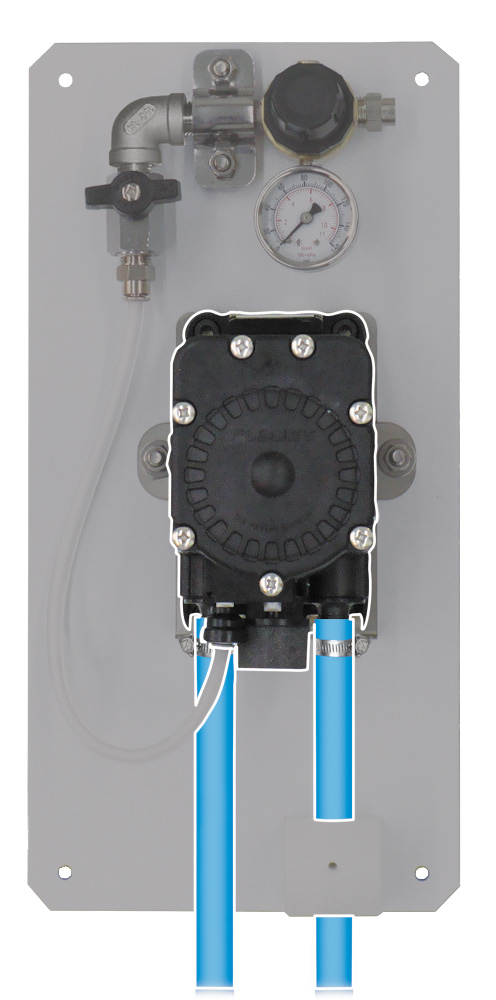
Transfer System with Pump #710757S
Chemical Concentrate or Ready-to-Use Solution
Compressed Air up to 4 CFM per pump
941600-ATEX
Transfer_System_Gun_Assembly.jpg
Warning! Read All Instructions Before Using Equipment!

Overview

The ATEX Pump Upgrade must be purchased with a compatible Transfer System, which will fill any size container with chemical concentrate or ready-to-use solution. The upgrade substitutes standard materials for all-EPDM hoses and an ATEX-approved FloJet air pump with Kalrez diaphragms, which are suitable for many solvent/alcohol applications. Transfer Systems draw chemical from bulk containers and dispense it into any other container through a 15 foot discharge hose and trigger gun.

Safety & Operational Precautions

  • For proper performance do NOT modify, substitute nozzle, hose diameter or length
  • Manufacturer assumes no liability for the use or misuse of this unit.
  • Wear protective clothing, gloves and eye-wear when working with chemicals.
  • Always direct the discharge away from people and electrical devices.
  • Follow the chemical manufacturer’s safe handling instructions.
  • DO NOT use chemicals that are not compatible with Kalrez diaphragms.
  • WARNING!  The pump must be connected to earth ground before operation to minimize the risk of static spark. Periodic inspection of the ground connection should be performed to ensure the equipment is properly grounded per local codes. Failure to follow these instructions could result in explosion, property damage, severe personal injury and/or death.

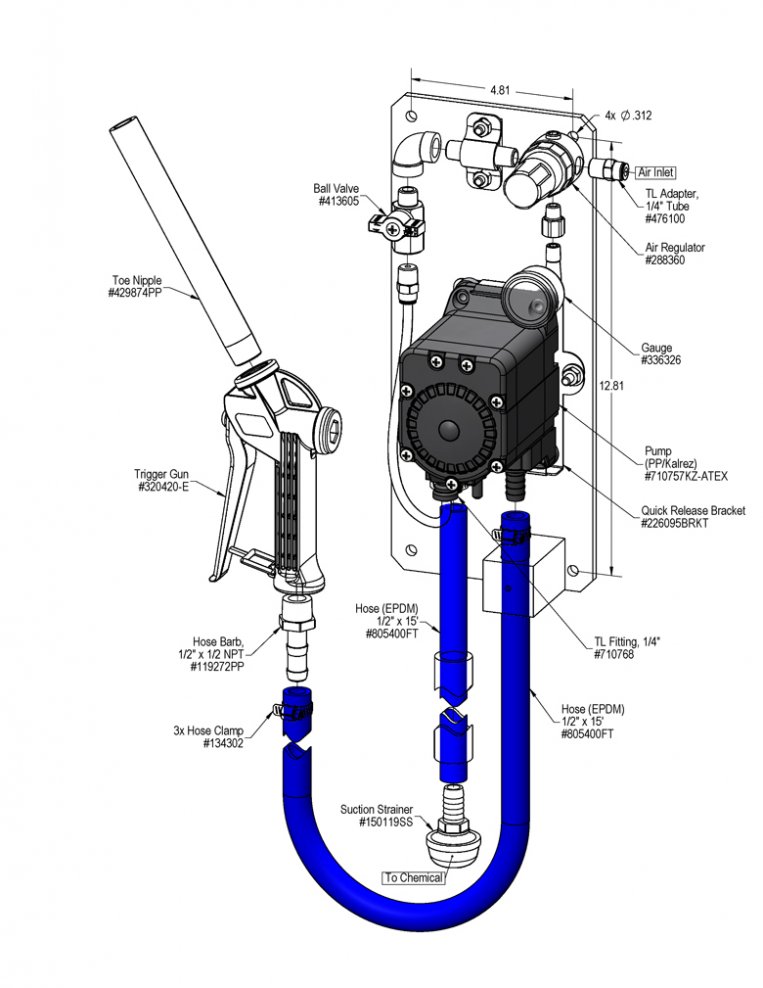
To Install (refer to diagram on next page)

  1. Mount the unit above solution supply level to prevent siphoning.
  2. Place the strainer in the chemical solution(s).
  3. Attach the discharge hose.
  4. Attach a compressed airline to the air inlet ball valve. DO NOT TURN ON.
  5. Air Filter/Dryer recommend.
IMPORTANT:  Mechanical operation and flowing fluids can generate static electricity. To avoid the risk of static sparking, ground the pump and all other equipment used in the hazard zone. Check your local electrical code for detailed grounding instructions for your area and type of equipment. The pump is equipped with a ground wire cable, which may be grounded to system ground or racking.  Refer to pump instructions.

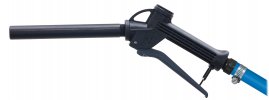
TRIGGER GUN

  1. Hold the trigger gun, open the inlet air ball valve, place the nozzle in the container to be filled. Pull the trigger and begin.
  2. When container is filled to the desired level, release the trigger. Close the inlet ball valve and pull the trigger to relieve pressure in the hose.

BALL VALVE

  1. Make sure the discharge ball valve is closed and in hand.
  2. Open the inlet ball valve, place the wand in the container to be filled then open the discharge ball valve to begin filling container.
  3. When container is filled to the desired level, close the valve then close the inlet ball valve and relieve pressure in the hose.
941600-ATEX.jpg
Troubleshooting Guide
Problem Possible Cause / Solution
StartupMaintenance
A) Air pump will not run or pump chemical solution.
B) Will not draw chemical.
C) Pump runs too fast with no output.


1,3,4
1,2,3
2

5,6,9,10
6,7,8
6,7,8,9

Possible Cause / Solution
StartupMaintenance
  1.  Inlet ball valve partially closed or air pressure too low.
    • Completely open air inlet ball valve.
  2. Chemical tube not immersed in container or container empty
    • Immerse tube or replenish.
  3. Hose kinked
    • Straighten the hose.
  4. Ice particles from condensation in air line — Air pump can periodically "freeze up” (stall) due to ice particles in the pump's exhaust (depending on air humidity & other factors)
    • WAIT several seconds to allow the ice particles to melt and blow out, at which time the pump will automatically resume pumping.
  1. Air regulator clogged or failed
    • Clean or replace.
  2. Chemical strainer clogged up
    • Clean or replace.
  3. Vacuum leak in suction line.
    • Tighten the connection(s).
  4. Chemical tube stretched out where tube attaches or pin hole/cut in tube sucking air.
    • Cut off end of tube or replace tube.
  5. Problem with air pump
  6. Use of an oiler in the airline will cause pump to stall
    • Use only clean, dry air.
PREVENTIVE MAINTENANCE: When the unit will be out of service for extended periods, place chemical tube(s) in water and flush the chemical out of the unit to help prevent chemical from drying out and causing build-up. Periodically check and clean chemical strainer and replace if missing.